
How to Create a Facebook Page?
A Facebook Page allows a company, brand, association, public figure, or project to communicate professionally on Facebook. Unlike a personal profile, a page is designed for public visibility and business communication. For a related comparison, see How to Create Your Facebook Ad in 2024?.
Creating a page is only the first step. It must then be customized, completed, managed, and connected to a content strategy. For a related comparison, see Complete Guide to Signing Up for Facebook in 2024.
1. Differences Between a Facebook Page and a Facebook Profile
A profile represents an individual person. A page represents a business, brand, organization, public figure, or project.
1.1 Objective
A profile is for personal relationships, while a page is for public communication, marketing, customer interaction, and brand visibility.
1.2 Features
Pages include professional tools such as insights, ads, page roles, contact buttons, services, reviews, and business information.
1.3 Following
People can follow or like a page without becoming personal friends. This allows broader public reach.
1.4 Audience
A page can reach customers, prospects, partners, and communities interested in the brand.
1.5 Management
Pages can be managed by several collaborators with different roles and permissions.
2. Create a Facebook Page on Desktop
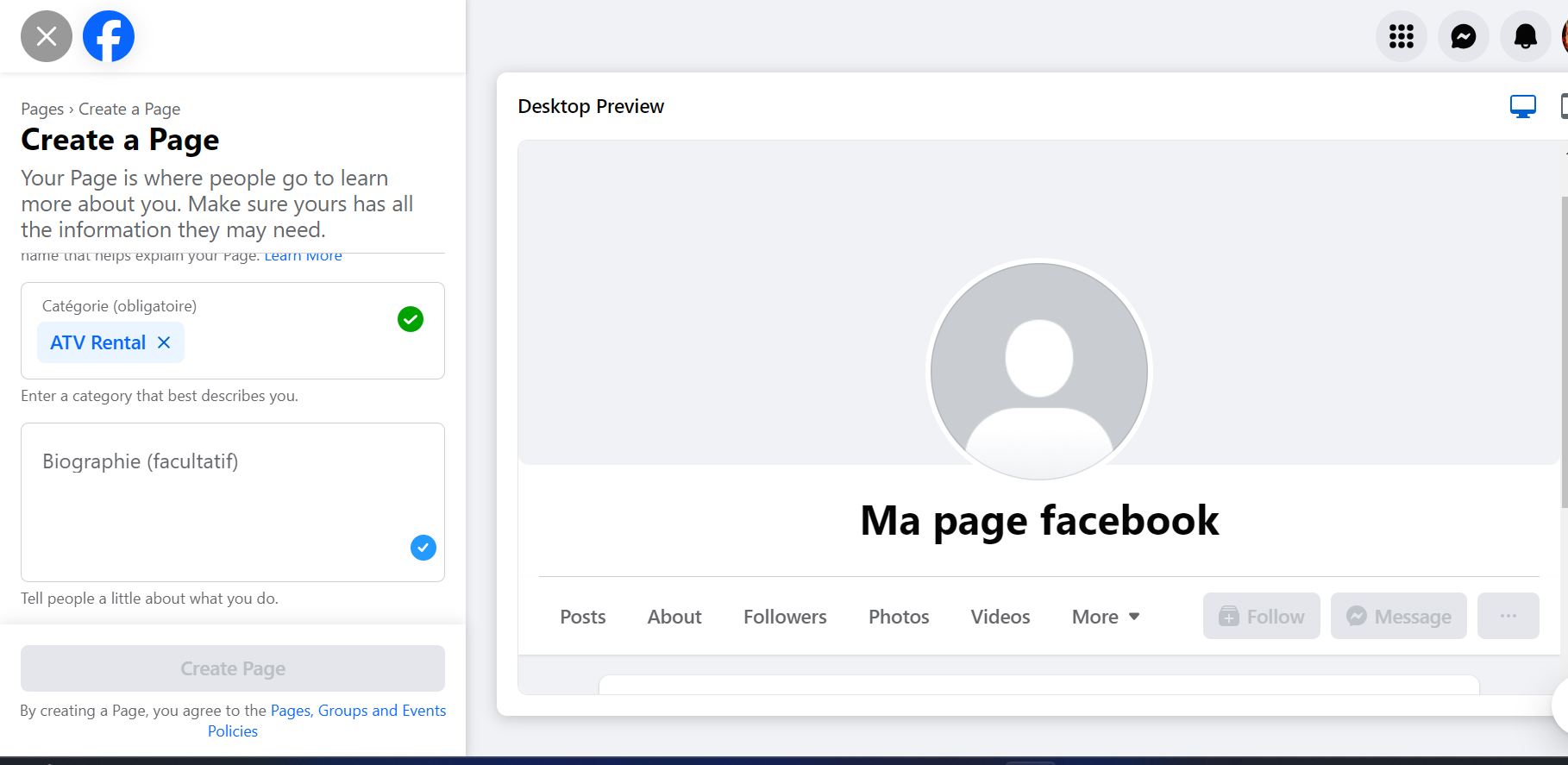
Log in to Facebook, open the Pages section, choose to create a new page, enter the name, category, description, and basic information.
3. Customize Your Facebook Page
Customization makes the page more professional and useful for visitors.
3.1 Cover Photo
Use a cover photo that reflects the brand, offer, campaign, or value proposition.
3.2 Complete the About Section
Add a clear description, website, phone number, email, address, opening hours, and other useful details.
3.3 Add a Username
A username makes the page easier to find and share.
3.4 Choose a Page Template
Templates can adapt the page layout to a business type, such as services, shopping, restaurants, or public figures.
3.5 Assign Roles to Collaborators
Give access only to trusted people and choose roles according to responsibilities. This protects the page and organizes teamwork.
Additional Practical Guidance
For Facebook page creation, the most important principle is to connect the method with a clear objective. A company should know what it wants to improve: visibility, engagement, sales, trust, traffic, leads, or customer education. This objective gives direction to every decision.
A good approach also requires consistency. Isolated actions can produce temporary attention, but lasting results come from repeated effort, measurement, and improvement. The strategy should be realistic enough to be maintained over time.
Measurement is essential. Useful indicators may include traffic, clicks, conversions, engagement, bounce rate, time on page, search visibility, cost per result, or qualified contacts. The right indicators depend on the topic and the business objective.
User experience should remain central. Whether the subject is content, advertising, social media, SEO, or website creation, users must understand the message quickly and know what to do next.
Content quality also matters. Clear explanations, practical examples, structured headings, and concrete recommendations make the content more useful for readers and more valuable for search engines.
Companies should document their process. A simple document with objectives, target audience, messages, channels, budget, deadlines, and validation rules helps teams collaborate more efficiently.
It is also useful to compare different options before making decisions. Platforms, formats, providers, tools, and budgets should be evaluated according to real needs rather than habits or trends.
Finally, continuous improvement creates better results. Testing, reviewing, updating, and correcting small details over time often produces stronger performance than a single large action without follow-up.
Further Practical Notes
For Facebook page creation, the most important principle is to connect the method with a clear objective. A company should know what it wants to improve: visibility, engagement, sales, trust, traffic, leads, or customer education. This objective gives direction to every decision.
A good approach also requires consistency. Isolated actions can produce temporary attention, but lasting results come from repeated effort, measurement, and improvement. The strategy should be realistic enough to be maintained over time.
Measurement is essential. Useful indicators may include traffic, clicks, conversions, engagement, bounce rate, time on page, search visibility, cost per result, or qualified contacts. The right indicators depend on the topic and the business objective.
User experience should remain central. Whether the subject is content, advertising, social media, SEO, or website creation, users must understand the message quickly and know what to do next.
Content quality also matters. Clear explanations, practical examples, structured headings, and concrete recommendations make the content more useful for readers and more valuable for search engines.
Companies should document their process. A simple document with objectives, target audience, messages, channels, budget, deadlines, and validation rules helps teams collaborate more efficiently.
It is also useful to compare different options before making decisions. Platforms, formats, providers, tools, and budgets should be evaluated according to real needs rather than habits or trends.
Finally, continuous improvement creates better results. Testing, reviewing, updating, and correcting small details over time often produces stronger performance than a single large action without follow-up.
Further Practical Notes
For Facebook page creation, the most important principle is to connect the method with a clear objective. A company should know what it wants to improve: visibility, engagement, sales, trust, traffic, leads, or customer education. This objective gives direction to every decision.
A good approach also requires consistency. Isolated actions can produce temporary attention, but lasting results come from repeated effort, measurement, and improvement. The strategy should be realistic enough to be maintained over time.
Measurement is essential. Useful indicators may include traffic, clicks, conversions, engagement, bounce rate, time on page, search visibility, cost per result, or qualified contacts. The right indicators depend on the topic and the business objective.
User experience should remain central. Whether the subject is content, advertising, social media, SEO, or website creation, users must understand the message quickly and know what to do next.
Content quality also matters. Clear explanations, practical examples, structured headings, and concrete recommendations make the content more useful for readers and more valuable for search engines.
Companies should document their process. A simple document with objectives, target audience, messages, channels, budget, deadlines, and validation rules helps teams collaborate more efficiently.
It is also useful to compare different options before making decisions. Platforms, formats, providers, tools, and budgets should be evaluated according to real needs rather than habits or trends.
Finally, continuous improvement creates better results. Testing, reviewing, updating, and correcting small details over time often produces stronger performance than a single large action without follow-up.
Further Practical Notes
For Facebook page creation, the most important principle is to connect the method with a clear objective. A company should know what it wants to improve: visibility, engagement, sales, trust, traffic, leads, or customer education. This objective gives direction to every decision.
A good approach also requires consistency. Isolated actions can produce temporary attention, but lasting results come from repeated effort, measurement, and improvement. The strategy should be realistic enough to be maintained over time.
Measurement is essential. Useful indicators may include traffic, clicks, conversions, engagement, bounce rate, time on page, search visibility, cost per result, or qualified contacts. The right indicators depend on the topic and the business objective.
User experience should remain central. Whether the subject is content, advertising, social media, SEO, or website creation, users must understand the message quickly and know what to do next.
Content quality also matters. Clear explanations, practical examples, structured headings, and concrete recommendations make the content more useful for readers and more valuable for search engines.
Companies should document their process. A simple document with objectives, target audience, messages, channels, budget, deadlines, and validation rules helps teams collaborate more efficiently.
It is also useful to compare different options before making decisions. Platforms, formats, providers, tools, and budgets should be evaluated according to real needs rather than habits or trends.
Finally, continuous improvement creates better results. Testing, reviewing, updating, and correcting small details over time often produces stronger performance than a single large action without follow-up.
Further Practical Notes
For Facebook page creation, the most important principle is to connect the method with a clear objective. A company should know what it wants to improve: visibility, engagement, sales, trust, traffic, leads, or customer education. This objective gives direction to every decision.
A good approach also requires consistency. Isolated actions can produce temporary attention, but lasting results come from repeated effort, measurement, and improvement. The strategy should be realistic enough to be maintained over time.
Measurement is essential. Useful indicators may include traffic, clicks, conversions, engagement, bounce rate, time on page, search visibility, cost per result, or qualified contacts. The right indicators depend on the topic and the business objective.
User experience should remain central. Whether the subject is content, advertising, social media, SEO, or website creation, users must understand the message quickly and know what to do next.
Content quality also matters. Clear explanations, practical examples, structured headings, and concrete recommendations make the content more useful for readers and more valuable for search engines.