
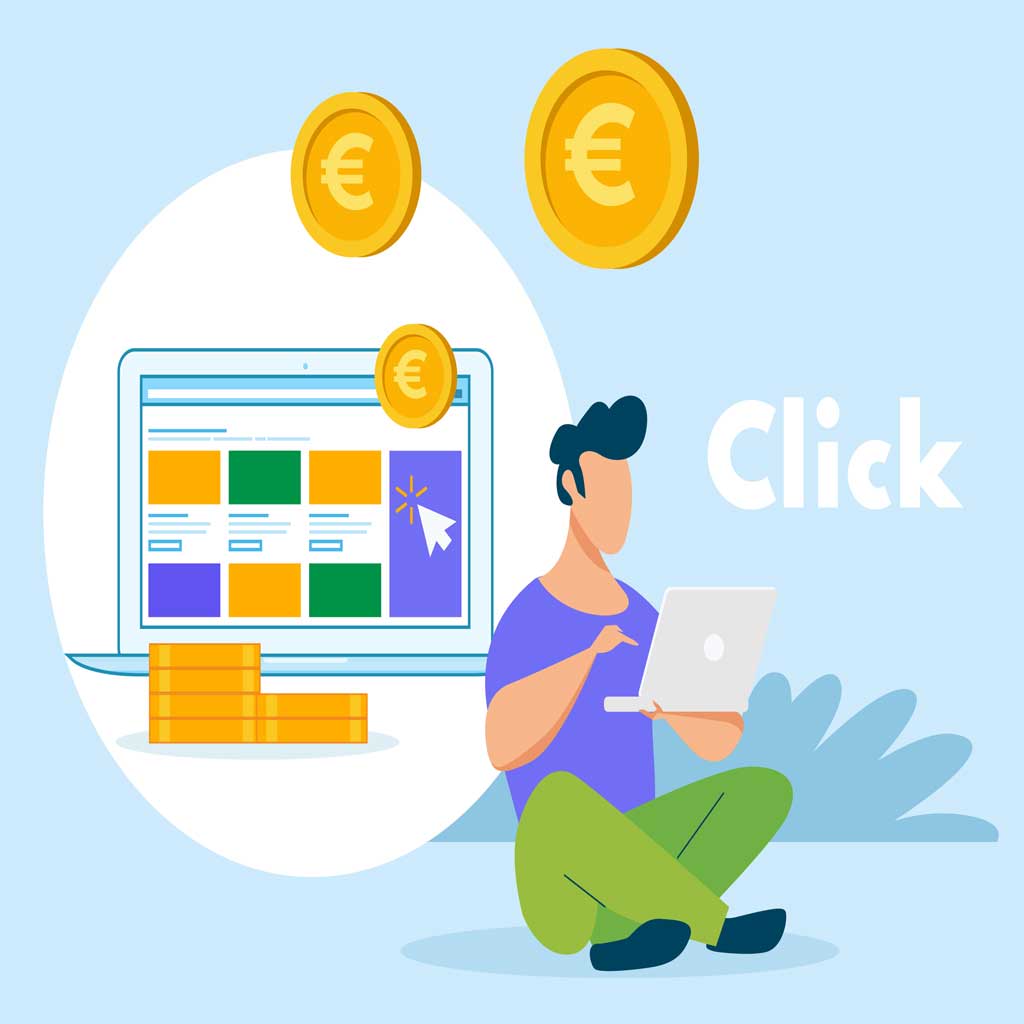
What Is the Value of Cost Per Click (CPC)?
Cost per click, or CPC, is a key indicator in online advertising. It shows how much an advertiser pays each time a user clicks on an ad. CPC is used on platforms such as Google Ads, Meta Ads, LinkedIn Ads, and many other advertising networks. For a related comparison, see 9 Key Benefits of SEO to Boost Your Website on Google in 2024.
Understanding CPC helps companies manage advertising budgets, evaluate campaign profitability, and optimize results. A low CPC is not always good if clicks do not convert, and a high CPC can be acceptable if the campaign generates profitable customers.
1. How to Define and Understand Cost Per Click (CPC)
CPC is the amount paid for one click on an advertisement. It is commonly used in search ads, display ads, social media ads, and sponsored content.
The value of CPC depends on competition, audience targeting, keyword demand, ad quality, platform, location, industry, and campaign objective.
1.1 Average Cost Per Click
Average CPC is calculated by dividing total ad spend by the number of clicks. It gives a general view of how much traffic costs in a campaign.
However, average CPC should be analyzed together with conversion rate and revenue. Cheap clicks are not useful if they bring the wrong audience.
1.2 Maximum Cost Per Click
Maximum CPC is the highest amount an advertiser is willing to pay for one click. On auction-based platforms, this bid helps determine whether the ad can appear and in which position.
A higher maximum CPC can improve competitiveness, but it must remain aligned with profitability.
1.3 Optimized CPC vs Manual CPC Bidding
Manual CPC gives advertisers more direct control over bids. Optimized or automated bidding uses platform algorithms to adjust bids according to performance signals.
Manual bidding can be useful for tight control, while automated strategies can help when enough conversion data is available.
2. How CPC Works
Most CPC systems operate through auctions. Advertisers compete for visibility based on bids, ad quality, relevance, expected engagement, and landing page experience.
The winning ad is not always the one with the highest bid. Platforms often reward relevance because they want users to click on useful ads.
2.1 Factors Influencing CPC
CPC can be influenced by industry competition, keyword difficulty, audience size, geographic targeting, seasonality, ad relevance, quality score, device, and time of day.
Improving ad quality and landing page relevance can reduce CPC while improving results.
2.3 Types of Ads Used With CPC
CPC can apply to search ads, display ads, shopping ads, video discovery ads, social media ads, native ads, and retargeting campaigns.
Each format has different behavior. Search clicks often show stronger intent, while social clicks may need more nurturing before conversion.
3. How to Determine CPC
To determine CPC, define the campaign objective, target audience, platform, keywords, budget, and expected conversion value. The right CPC is the one that supports profitable acquisition.
3.1 Value of CPC Calculation
Calculating CPC helps compare campaigns and channels. It shows which ads bring traffic at a reasonable cost and which ones may require optimization.
3.2 CPC Formula
The formula is simple: CPC = total advertising cost / number of clicks. For example, if a campaign spends 100,000 FCFA and receives 500 clicks, the CPC is 200 FCFA.
This number should then be compared with conversion rate, cost per lead, cost per sale, and customer value.
3.3 CPC Calculation Example
If two campaigns have the same CPC but one converts twice as well, the second campaign is more profitable. This is why CPC alone is not enough to judge performance.
A campaign manager should always connect CPC with business outcomes.
4. Techniques to Reduce CPC
Improve ad relevance, refine targeting, use negative keywords, test different creatives, improve quality score, optimize landing pages, and pause weak placements.
You can also segment campaigns by audience, device, location, or intent. Better segmentation often improves performance and reduces wasted spend.
Finally, monitor campaigns regularly. CPC can change depending on competition and seasonality, so optimization must be continuous.
Additional note
Practical Recommendations
To get better results with cost per click optimization, companies should begin with a clear diagnosis. This means identifying the current situation, available resources, target audience, priorities, and expected outcomes. Without this foundation, actions can become scattered and difficult to measure.
The next step is to define indicators. Depending on the subject, these indicators can include traffic, engagement, leads, conversion rate, cost per result, visibility, time spent on page, contact requests, sales, or customer feedback. Clear indicators help separate impressions from real performance.
It is also useful to document decisions. A simple document can describe the strategy, target audience, messages, content formats, publishing rhythm, budget, responsibilities, and validation process. This keeps the project organized and makes collaboration easier.
For advertisers managing paid campaigns, consistency is often more important than intensity. A very ambitious action plan that cannot be maintained will quickly lose value. It is better to choose a realistic rhythm, execute it properly, analyze results, and improve progressively.
Another recommendation is to compare several options before investing. Whether the company is choosing a provider, platform, campaign format, or content direction, comparison helps avoid decisions based only on habit or price. The best choice is the one that supports business objectives over time.
Common Mistakes to Avoid
One common mistake is to act without understanding the audience. Digital actions should answer real needs, questions, objections, and expectations. When the audience is poorly defined, messages become too general and performance decreases.
Another mistake is to focus only on visibility. Visibility is useful, but it must lead somewhere: a contact request, a sale, a subscription, a download, a conversation, or stronger brand trust. Every action should connect to a next step.
Companies should also avoid neglecting measurement. Without analytics, it becomes difficult to know what works. Even basic tracking can reveal which channels, pages, messages, or campaigns deserve more attention.
Finally, do not treat cost per click optimization as a one-time task. Digital performance improves through testing, correction, and regular optimization. Markets evolve, platforms change, competitors move, and customer expectations become more demanding.
How Didacweb Can Help
Didacweb supports companies that want to improve their online presence through website creation, SEO, social media, content strategy, advertising, and digital marketing. The objective is to connect technical execution with business value.
A professional approach helps avoid scattered actions and gives the company a clearer roadmap. With the right support, cost per click optimization can become part of a stronger digital strategy that improves visibility, credibility, and growth.
The real goal is not always the lowest CPC, but the best balance between click cost, lead quality, conversion rate, and customer value. For a broader overview of this topic, see optimize a website.
CPC and Profitability
A campaign with a higher CPC can be profitable if the visitors convert well and generate strong revenue. Conversely, a low CPC can waste money if the clicks come from users who never buy or contact the company.
This is why CPC should be analyzed with cost per lead, cost per acquisition, conversion rate, and lifetime value.
Additional note
Additional Guidance for Cost Per Click
CPC should be monitored at several levels: campaign, ad group, keyword, audience, placement, device, and creative. This level of analysis helps identify where money is being spent effectively and where it is being wasted.
A useful approach is to divide the work into priorities. First, handle the elements that directly affect trust and conversion: clarity of the offer, quality of the message, contact options, mobile display, and proof elements. Then improve visibility through SEO, social media, advertising, or partnerships. Finally, refine performance through testing and analytics.
Companies should also involve the right people internally. Marketing, sales, management, and customer service teams often have different insights. Sales teams know common objections, customer service knows recurring questions, and management knows strategic priorities. Bringing these perspectives together creates stronger decisions.
Another important practice is to keep the customer journey in mind. A user rarely moves from discovery to purchase in one second. They may see a post, visit a page, compare options, ask questions, and return later. Digital actions should support this journey instead of relying on one isolated message.
Documentation helps maintain consistency. Keep a record of messages, keywords, target audiences, visuals, campaign results, content ideas, and lessons learned. This makes future actions faster and more coherent.
Finally, performance should be reviewed regularly. A monthly review can identify what progressed, what failed, what should be tested, and what should be stopped. This rhythm helps companies improve without waiting for major problems.
How to Improve CPC Without Losing Quality
Improving CPC does not mean attracting the cheapest possible clicks. It means improving the relationship between cost, relevance, and results. A campaign can reduce CPC by improving ad quality, using better keywords, refining targeting, and improving landing page experience.
Negative keywords are very useful in search advertising. They prevent ads from showing for irrelevant queries and help protect the budget.
Ad testing is also important. Different headlines, descriptions, visuals, and calls to action can produce different click costs. Testing allows advertisers to keep the best-performing combinations.
Landing page quality influences campaign performance. If the page is slow, confusing, or unrelated to the ad, users leave quickly and the platform may reduce ad quality signals.
Additional note
When a High CPC Can Be Acceptable
A high CPC is not automatically a problem. In some industries, a single customer can generate significant revenue. If the conversion rate and customer value are strong, paying more for a qualified click can be profitable.
For example, a click that costs more but leads to a serious quote request may be better than many cheap clicks from unqualified users. This is why advertisers should evaluate the full funnel.
Connecting CPC With Landing Pages
The landing page must match the ad promise. If the ad talks about a service, the page should immediately present that service, its benefits, proof elements, and a clear call to action.
Improving the page can increase conversion rate, which makes the same CPC more profitable. Sometimes the problem is not the ad cost, but the page experience after the click.
CPC optimization is therefore both an advertising task and a website optimization task.
Additional note
Monitoring CPC Over Time
CPC can change from one week to another because of competition, seasonality, audience fatigue, budget changes, and platform behavior. Advertisers should monitor trends instead of reacting to one isolated day.
When CPC increases, check whether the audience is too narrow, the creative is old, the keyword is too competitive, or the quality score has decreased. Each cause requires a different correction.
A strong campaign review includes CPC, impressions, click-through rate, conversions, cost per conversion, and revenue. This complete view prevents decisions based on click cost alone.
Additional note
Advertisers should also watch frequency and audience fatigue on social platforms. If the same people see the same ad too often, clicks may become more expensive and engagement may decline. Refreshing creatives can help restore performance.
For search campaigns, reviewing search terms is essential. This report shows the real queries that triggered ads and helps identify both opportunities and irrelevant traffic.
Additional note
Budget distribution also matters. A campaign with too many ad groups and too little budget may not collect enough data to optimize properly. Concentrating budget on the most promising segments can help the platform learn faster.
In all cases, CPC must remain connected to the final objective: profitable growth, not just cheaper traffic.
Additional note
Good CPC management is therefore a continuous process of testing, analysis, and adjustment rather than a fixed number to reach once and forget.
Additional note
That discipline protects advertising profitability.
Additional note
It also improves decision-making.
Additional note
Always test.
Additional note CPC must always support profitable acquisition.