
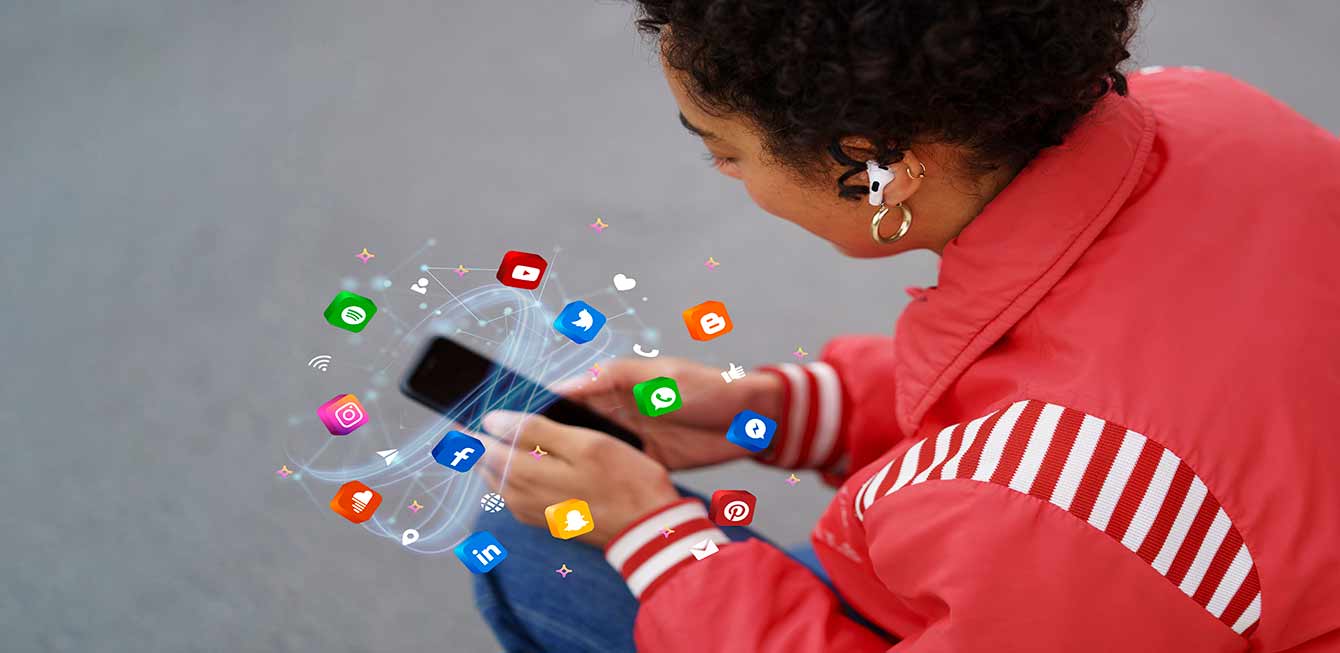
How to Set Up Social Media Monitoring for Your Business
Social media monitoring goes far beyond simple surveillance. It is a proactive approach that helps you capture market trends, listen to customer feedback and anticipate competitors’ actions. Today, social networks are not only communication platforms; they have become places for discussion, criticism, praise, debate and, above all, real reservoirs of information.
How can you turn this monitoring into a real asset for your business? In this article, the experts from our web marketing agency guide you through the creation of an effective monitoring strategy, adapted to your needs, to help you anticipate new developments, monitor competitors and seize growth opportunities.
1. Why monitor social media?
Active social media monitoring is no longer simply an option. It has become a fundamental necessity for any company, regardless of size or industry. Social platforms reveal what people think, expect, criticize and recommend, often faster than traditional market research.
1.1 Maintain the connection with your customers
Social media platforms have become spaces where customers express themselves freely, sharing their experiences, frustrations and expectations. Social listening is essential here because it allows you to monitor these conversations closely and understand what motivates your audience.
This approach goes beyond simply watching for mentions of your brand. It analyzes conversations around topics that matter in your industry. By adopting this strategy, you obtain valuable information about your customers and can respond quickly, whether to solve a problem or seize an opportunity for interaction.
1.2 Carefully observe competitor activities
Your competitors are constantly active. They launch new offers, test innovative marketing strategies and collect feedback from their customers. Through proactive monitoring, you can observe their initiatives, identify weaknesses and spot the opportunities they are exploiting.
If one of their campaigns does not perform as expected, it may be an opportunity for you to do better. If they launch a product or service that attracts your audience, you can learn from it and refine your own approach. Monitoring helps you stay one step ahead and anticipate market changes.
1.3 Identify market trends
Social media reflects emerging trends very quickly. Whether it is a change in buying habits, the rise of a new technology or growing interest in a specific product, these signals often appear first on social platforms. Monitoring gives you the ability to identify early signals before they become widespread.
An emerging trend can become an opportunity to adapt your offers or launch a new communication campaign. Reacting quickly to trends also helps you remain relevant in a market that is constantly changing.
1.4 Anticipate and control crisis situations
Detecting and managing critical situations on social media can be decisive when a problem escalates quickly. An unhappy customer, a faulty product or a negative buzz can trigger a crisis in a very short time. Proactive monitoring allows you to identify the first signs of a crisis before it grows.
This anticipation gives you the opportunity to take corrective measures, manage crisis communication and limit potential damage. By acting quickly, you can even turn a difficult situation into an opportunity to show your ability to respond and solve customer problems.
1.5 Optimize your products and services
Social platforms are an invaluable source of feedback. Users freely share opinions, positive or negative. By analyzing these comments, you access essential information to improve your products or services.
What delights your customers? What frustrates them? Which needs remain unmet? All this data comes directly from your audience and can feed your innovation process. Active monitoring helps you understand how to improve by staying close to your market’s expectations.
1.6 Optimize campaign effectiveness
When you launch a campaign on social platforms, you want to know how it is received and what reactions it generates. Monitoring allows you to evaluate the impact of your initiatives in real time. You can quickly identify whether a message resonates positively or needs a change in tone.
You can also identify the content that generates the most engagement or shares, allowing you to refine future campaigns. In short, monitoring gives you the levers needed to improve your efforts and optimize the return on your marketing actions.
2. Types of social media monitoring
There are several types of social media monitoring, each focused on specific objectives. Combining them gives you a complete view of your environment and helps you act proactively.
- Brand monitoring: tracking mentions of your company, products, executives, campaigns and branded hashtags.
- Competitive monitoring: observing competitors’ content, campaigns, offers, community reactions and positioning.
- Trend monitoring: identifying emerging topics, hashtags, behaviors, formats and conversations in your market.
- Customer monitoring: understanding expectations, objections, complaints, recurring questions and satisfaction signals.
- Reputation monitoring: detecting risks, negative comments, bad buzz and sensitive conversations before they become crises.
3. How to monitor social media effectively for your business
3.1 Define your objectives clearly first
It is easy to get lost in the constant flow of social media data. Avoid analyzing too broadly without a clear focus. Take the time to define your monitoring objectives: do you want to understand conversations around your brand, spot innovations, monitor competitors, detect crises or improve customer service?
Each objective requires a specific approach and precise indicators. Monitoring brand mentions does not require exactly the same tools or keywords as tracking a market trend or competitor campaign.
3.2 Select the right platforms
Not all platforms have the same value for every business. LinkedIn may be essential for a B2B company, while Instagram, TikTok or Facebook may be more relevant for a consumer brand. X/Twitter can be useful for real-time conversations, while YouTube and TikTok are important for video trends.
Choose platforms based on where your audience actually expresses itself, where competitors are active and where conversations about your industry are meaningful.
3.3 Use innovative tools to support you
Manual monitoring quickly becomes limited. Dedicated tools help centralize mentions, analyze sentiment, follow hashtags, compare performance and generate alerts. Depending on your needs, you can use solutions such as Hootsuite, Sprout Social, Mention, Brandwatch, Talkwalker, Google Alerts, Meta Business Suite or native analytics tools.
The tool is not the strategy. It only becomes useful when your objectives, keywords and reporting method are clear.
3.4 Select the right keywords
Your monitoring depends heavily on the keywords you follow. Include your brand name, product names, common misspellings, competitor names, campaign hashtags, sector terms, customer pain points and expressions linked to your services.
Good keyword selection helps you avoid noise and focus on conversations that really matter. Review your list regularly because language, trends and customer vocabulary change over time.
3.5 Study and adapt continuously
Monitoring is not a one-time task. It must lead to analysis, decisions and adjustments. Look at recurring questions, negative signals, engagement peaks, competitor launches, audience reactions and changes in sentiment.
Then adapt your content, products, offers, customer service scripts or campaign messages. A good monitoring strategy creates a loop between listening, learning and acting.
3.6 Make monitoring a habit, not a constraint
To be effective, social media monitoring must be integrated into your routines. Set regular review moments: daily alerts for sensitive topics, weekly summaries for marketing teams, monthly insights for management and quarterly strategic reviews. For a broader overview of this topic, see Why Outsource Your Social Media Management?.
When monitoring becomes a habit, it stops being a constraint and becomes a decision-making tool.
4. How to monitor competitors on social media?
4.1 Identify your main rivals
Start by listing your direct competitors, indirect competitors and emerging players. Include companies that target the same customers, offer similar services or occupy the same digital space. This gives you a clear field of observation.
4.2 Watch their profiles and publications
Observe their posting frequency, content formats, tone of voice, visual identity, calls to action and recurring themes. Identify what generates engagement and what seems to fall flat. This analysis helps you understand what your shared audience responds to.
4.3 Study their advertising campaigns
Competitor ads reveal priorities: products being pushed, offers, arguments, target audiences and positioning. Use ad libraries when available and observe how competitors structure their messages, visuals and landing pages.
4.4 Analyze their interactions and customer management
Look at how competitors respond to comments, complaints and questions. Are they fast, precise, warm, defensive or absent? Their community management can reveal strengths to learn from and weaknesses you can turn into an advantage.
4.5 Study customer reviews and feedback
Customer reviews are rich sources of insight. They show what people appreciate, what frustrates them and what expectations remain unmet. By analyzing competitor reviews, you can identify opportunities to position your offer more clearly.
4.6 Watch their cooperations and partnerships
Partnerships, influencer collaborations, events and co-branded campaigns show how competitors build visibility and authority. Monitoring these actions can inspire your own partnerships and reveal networks that matter in your sector.
4.7 Adjust your approach
Competitive monitoring is only useful if it leads to action. Use your findings to refine your editorial calendar, improve your offer, adapt your tone, test new formats and strengthen your differentiation. The goal is not to copy competitors, but to understand the market better and act more intelligently.
5. The most effective social media monitoring tools
Several tools can help you structure your monitoring. The best choice depends on your budget, your platforms, the size of your team and the level of analysis you need.
- Google Alerts: simple and free, useful for monitoring mentions on the web.
- Meta Business Suite: useful for monitoring Facebook and Instagram activity.
- Hootsuite: practical for scheduling, monitoring streams and managing several accounts.
- Sprout Social: strong for reporting, engagement and team management.
- Mention: useful for brand mentions and alerts.
- Talkwalker: powerful for advanced listening and reputation analysis.
- Brandwatch: adapted to large-scale social listening and deep analysis.
For a small business, starting with simple tools and a clear process is often enough. As the volume of data grows, more advanced tools become useful.
6. Make monitoring a driver of success
Social media monitoring is not just about watching what is happening. It is about understanding your market in real time, listening to your customers, learning from competitors and adapting faster than others.
When it is well organized, monitoring becomes a strategic advantage. It helps you improve communication, detect opportunities, prevent crises, optimize campaigns and strengthen customer relationships.
At Didacweb, we help companies turn social media data into clear decisions and concrete actions. With the right tools, the right keywords and the right analysis routine, your monitoring can become a true engine of digital performance.